.jpg)


The right sales learning management system gets new reps selling confidently in weeks instead of quarters, and gives revenue leaders proof that training is paying off. This guide compares eight sales LMS platforms so you can find the best LMS for sales training for a team of any size — whether you're hiring your first five reps or scaling past 200. The sales training platforms that get it right turn training into results.
What's a sales learning management system?
A sales learning management system is software that houses your sales team's training content, tracks who's completed it, and reports on how that training connects to performance. That's different from a sales enablement platform, even though the two terms get used interchangeably online. Brandon Hall Group's Excellence in Technology Awards lists learning management and sales enablement as separate award categories.
A sales LMS focuses on structured learning, like onboarding courses, product knowledge, certification, and skill-building over time. A sales enablement platform, sometimes called a revenue enablement platform, focuses on equipping reps in the moment with content libraries, buyer engagement tools, and deal-specific collateral. A sales readiness or sales coaching platform sits closer to enablement, emphasizing live practice and real-time feedback over formal courses.
These categories often work together. Many teams run a sales LMS for structured training and a sales enablement platform for in-deal content, connected through the same tech stack. The overlap is also why "is an LMS the same as an ERP system?" is a common search. It isn't. An ERP system runs your company's operations, like finance, inventory, and HR records.
An LMS runs your training. The confusion usually comes from both being enterprise software that new employees encounter in their first week, not from any real overlap in what the two systems do.
How to evaluate a sales training LMS
When you're evaluating sales enablement software, or narrowing down an LMS for sales training, focus on five traits that separate the platforms that move the needle from the ones that don't. Look for role-specific content, tight CRM integration, built-in coaching tools, outcome-tied reporting, and clear pricing. Weigh a platform against all five before you book a demo.
- Role-specific content support: Sales development reps, account managers, and sales leaders need different training. Look for a platform that lets you build or assign content by role, not one course for the whole sales org.
- CRM and sales-tool integrations: Training that lives apart from where reps already work — Salesforce, HubSpot, your sales engagement tool — gets ignored. Confirm the integrations you need exist before you buy.
- Coaching and roleplay capability: Reps build confidence by practicing, not by watching. Platforms with roleplay or call-coaching features give reps a low-stakes way to rehearse before a live deal is on the line. (Read about Absorb's Aura Rehearse feature, coming soon.)
- Reporting tied to business outcomes: Completion rates don't tell you whether reps are closing more deals. Reporting built for business outcomes, not just course metrics, is what closes that gap. Rachel Zwell, Director of Small and Mid-Market Sales at Absorb, puts it this way: "Skills are the leading indicators, while performance metrics are the lagging results. By bringing those together — using scorecard data to track skill development alongside deal size, close rate, and pipeline — you gain a clear, data-driven view of where each rep is excelling and where targeted coaching will have the greatest impact."
- Pricing transparency: Most vendors in this category, Absorb included, list enterprise pricing as "contact sales" instead of posting it. Budget extra time in your evaluation to get real numbers, and don't assume the most expensive option is the most capable one.
What sales training looks like at 20 reps vs. 200
How you evaluate a sales LMS changes with headcount, not just budget. The five traits above apply at every stage, but which ones matter most, and how much structure you need, looks different depending on your team.
At 20 reps
Onboarding is informal: new reps learn by shadowing a manager or a top performer, and the priority is getting them productive in their first month, not building a formal curriculum. A lightweight LMS that's fast to set up and doesn't need a dedicated administrator matters more than deep customization. CRM integration still helps, but a simple activity feed beats a heavily configured workflow.
"When upskilling through call coaching, we always start with what did you like about that call, and where would you like feedback? Starting with a compliment keeps the brain out of a self-destructive pattern where it can't absorb anything. And asking where they want feedback puts them in the driver's seat, it psychologically opens them to receive it, and gets them genuinely self-analyzing."
— Kim Brown, VP, Business Development, Absorb
Pricing follows the same logic. Most vendors on this list, Absorb included, only quote after a demo, but 360Learning publishes a starting rate of $8 per user, per month, according to Capterra.
At 200 reps
Onboarding has to be standardized across regions and roles, so a new SDR in one office gets the same ramp as one in another. Role-based paths for SDRs, account managers, and sales leadership stop being a nice-to-have.
Reporting tied to quota attainment and pipeline, not just completion, becomes what leadership actually asks for.
"When it comes to upskilling, skills are the leading indicators, while performance metrics are the lagging results. By bringing those together — using scorecard data to track skill development alongside deal size, close rate, and pipeline — you gain a clear, data-driven view of where each rep is excelling and where targeted coaching will have the greatest impact."
— Rachel Zwell, Director, Small & Mid-Market Sales, Absorb
Coaching at scale, through roleplay or call review, replaces one-on-one shadowing, since no single manager can coach 200 reps individually.
The platforms below serve both ends of that range. Weigh each against the stage you're solving for today.
Top LMS providers for sales enablement, compared
Whether you call it a sales training platform or a sales learning platform, before you dig into details, here's how the eight platforms in this guide stack up at a glance.
Platform | Best for | Standout feature |
|---|---|---|
Absorb LMS | Teams that want one platform for sales training and company-wide learning | Role-based content tools plus CRM integrations |
360Learning | Teams that want peer-led, collaborative training | Built-in coaching and feedback tools for managers |
Mindtickle | Teams that need continuous readiness tracking | AI roleplay for practicing pitches and objections |
Showpad | Teams bridging sales and marketing content | Centralized, always-current sales content library |
Adobe Learning Manager | Large, global sales and partner organizations | AI-driven personalized learning paths at scale |
Allego | Teams that need training embedded in daily workflow | Conversation intelligence from recorded sales calls |
SalesHood | Teams that want structured, measurable ramp programs | Digital sales rooms for buyer engagement |
Learn:Up (formerly WorkRamp) | Teams that need highly customized training paths | Interactive simulations for scenario practice |
8 best sales training software of 2026
1. Absorb LMS
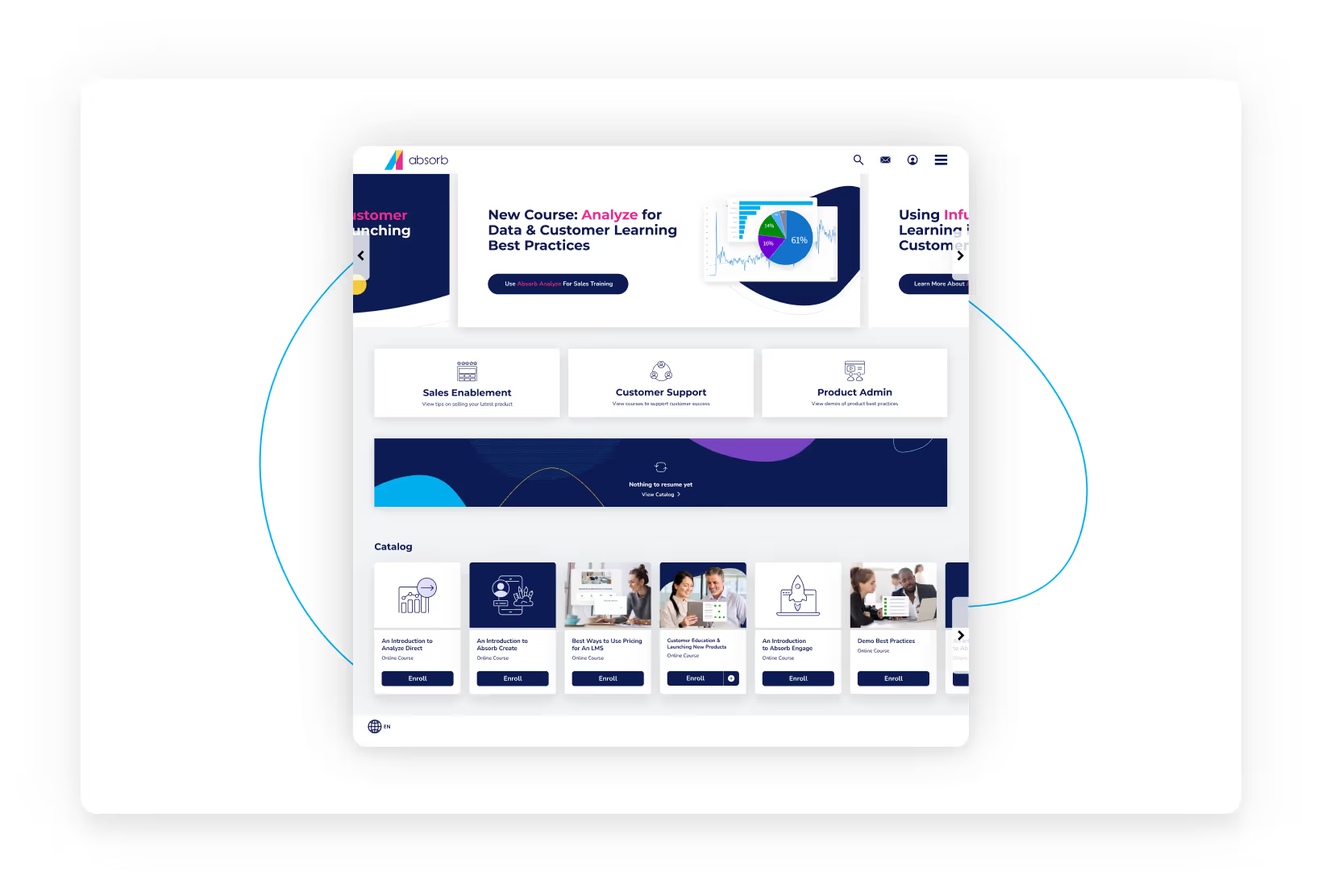
For teams that don't want separate systems for compliance, product, and sales content, Absorb LMS puts sales training and company-wide learning on one platform.
It supports role-specific content for SDRs, account managers, and sales leadership, along with tools to build training around each role's goals. Gamification features like badges and leaderboards tap into the natural competitiveness of sales teams, and integrations with CRMs like Salesforce keep training connected to daily workflows. Reporting ties learner progress to course performance, so training outcomes are visible, not assumed.
Why it's great for sales teams
Sales teams thrive on simplicity and impact. Absorb LMS eliminates the friction of accessing training materials, allowing your team to focus on what matters—learning and driving results. Whether you're onboarding new sales reps or delivering advanced training for account managers or sales leaders, Absorb inspires meaningful learning experiences that fuel productivity and performance.
Top features and benefits:
- Relevant sales content: Tailor training for specific roles like SDRs, AMs, CSMs, and sales leadership to ensure every team member gets what they need to excel.
- Flexible content creation tools: Build personalized content based on roles, development paths, or individual growth goals, making every learning experience relevant and impactful.
- Engages sales teams: Use gamification features like badges, leaderboards, and challenges to keep learners motivated and excited. This approach often proves to be quite effective, considering the natural competitiveness of sales teams.
- Advanced reporting and analytics: Stay in the loop on learner progress, course performance, and training impact to tie learning directly to sales outcomes.
- Seamless integrations: Connect Absorb with CRMs like Salesforce and sales productivity tools so training aligns with day-to-day workflows and sales strategies.
Absorb LMS helps organizations do more with learning. It ties the impact of training to real business outcomes, enhancing sales team performance, increasing customer satisfaction, and driving overall business success. With Absorb, your organization achieves training goals while inspiring learning experiences that produce tangible results.
"We've had very positive feedback from our sales team and no concerns about usability or how to use the platform."
— Bill Petersen, Head of Sales Enablement, Litmus
Litmus, an email marketing platform growing roughly 40% year over year, needed to get a dispersed, fast-scaling sales team trained without slowing the business down. Absorb LMS became their system.
2. 360Learning
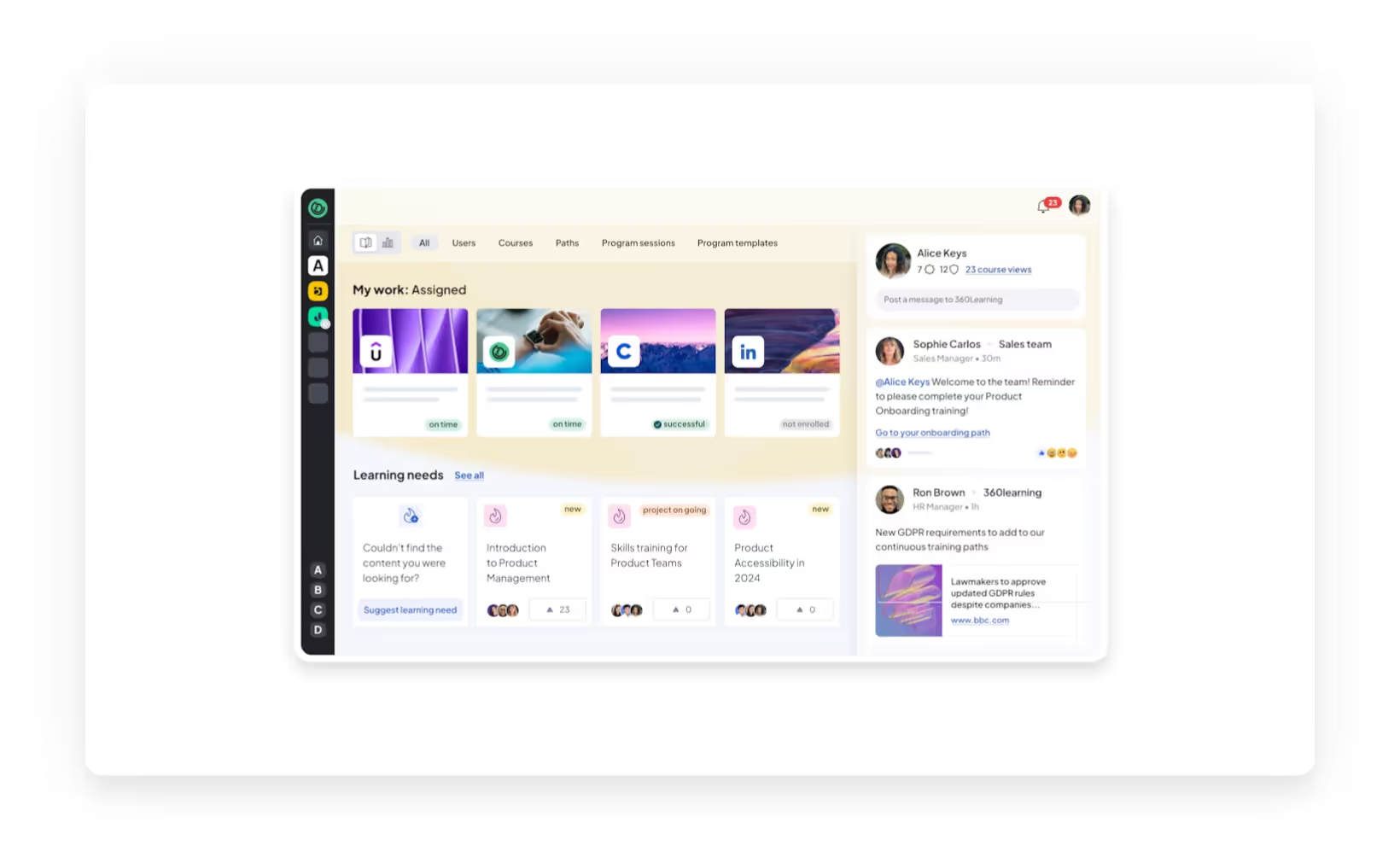
Peer-to-peer learning is the foundation of 360Learning's platform. Reps and managers create and share training content directly on the platform, so lessons from top performers get passed along instead of staying with one person.
It includes coaching tools that let managers give feedback inside the platform, and a mobile-friendly interface for reps who are rarely at a desk.
Why it's great for sales teams
Sales professionals often learn best from their peers, whether it's perfecting pitches or handling objections. 360Learning empowers team members to share their expertise, creating a collaborative environment where everyone improves.
Top features and benefits:
- Collaborative learning: Let your team create and share training modules so real-world insights are passed along.
- Integrated coaching tools: Managers can provide feedback and guidance directly in the platform.
- Mobile-friendly platform: Access training on the go (a huge plus for sales teams on the move).
- Built-in analytics: Track learner engagement and performance to see how your team's skills are improving.
360Learning works well for companies with distributed teams. It fosters a culture of shared learning no matter where people are based.
3. Mindtickle
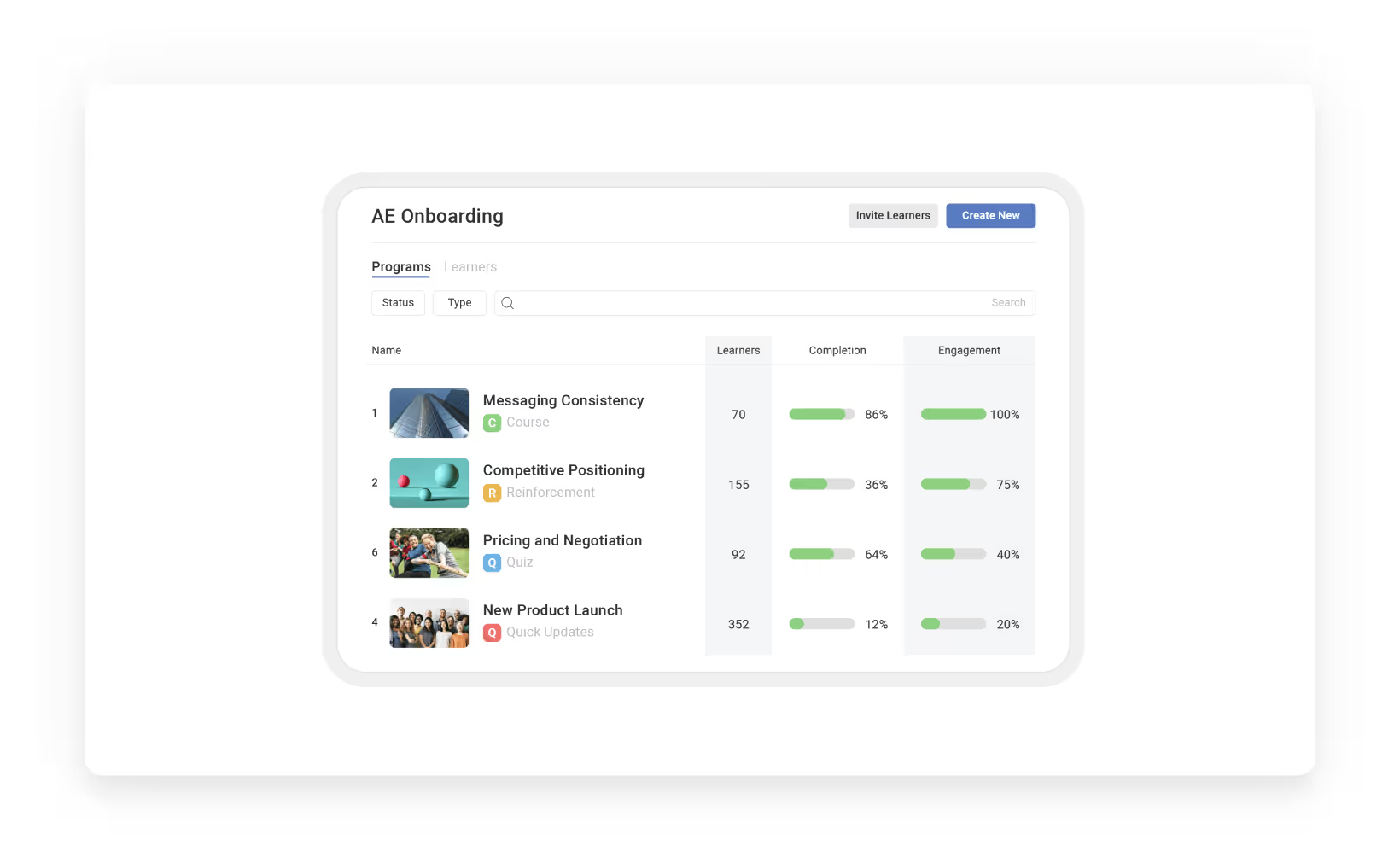
Continuous sales readiness drives Mindtickle's platform — onboarding new hires and keeping experienced reps sharp on an ongoing basis, not just at hire date.
Personalized coaching programs help reps refine specific techniques, and AI roleplay turns practice into an interactive exercise instead of a one-off training session. Performance analytics compare reps and teams against top performers to guide where coaching should focus next.
Why it's great for sales teams
Mindtickle stands out for its hands-on approach to training. From onboarding new hires to refining the skills of seasoned pros, it makes sure everyone stays sharp and ready to close deals.
Top features and benefits:
- Sales coaching: Personalized coaching programs help reps refine their techniques.
- Content management: Store, organize, and distribute training materials efficiently.
- AI role plays: Make training sessions more engaging with interactive challenges.
- Performance analytics: Compare reps, regions, and teams to top performers' skills and behaviors to create tailored training and coaching plans.
Mindtickle's AI-driven tools provide insights into areas where your team can improve, making it an excellent choice for sales enablement managers.
4. Showpad
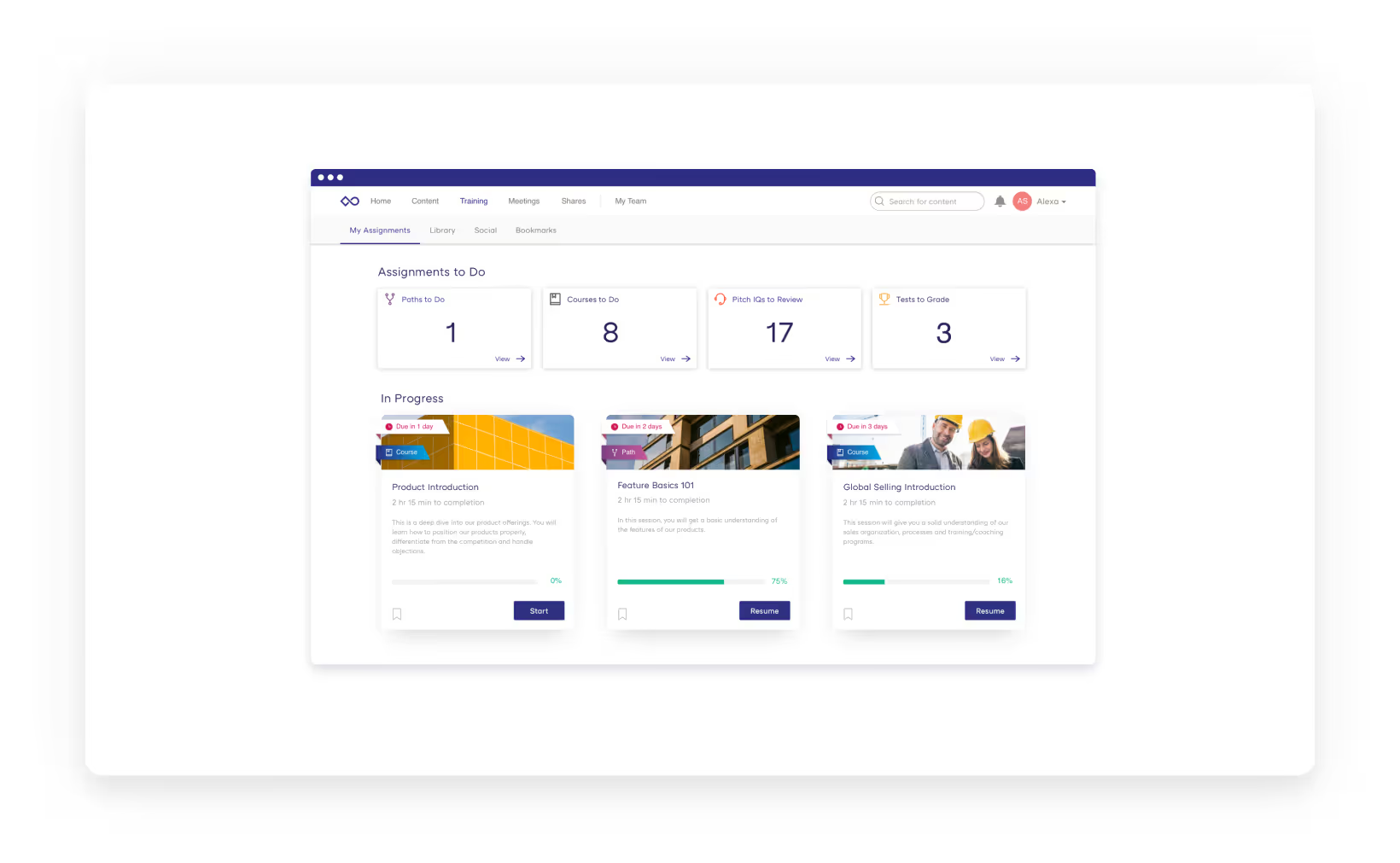
Showpad centers on keeping sales and marketing content in sync, so reps always have access to the most current materials without hunting for them.
Content management tools organize sales collateral in one place, and buyer engagement features let reps build personalized experiences for prospects. Analytics show how buyers engage with shared content, which helps refine what gets sent next.
Why it's great for sales teams
Sales reps often struggle to find the right content at the right time. Showpad solves this by centralizing all sales materials in one place and providing tools to deliver a more personalized buyer experience.
Top features and benefits:
- Content management: Organize sales materials so everyone has access to the most up-to-date resources.
- Buyer engagement tools: Create customized content experiences to capture attention and drive deals forward.
- Seller effectiveness: Equip your team with tools to deliver impactful presentations and follow-ups.
- Analytics and insights: Understand how prospects engage with your content to refine strategies.
Showpad's integration with CRMs and marketing automation platforms keeps your sales and marketing teams in lockstep.
5. Adobe Learning Manager
.avif "Image005-LMSForSales-Adobe (1)")
Large, global sales and partner organizations are the best fit for Adobe Learning Manager. Personalization at scale matters here more than a small feature set.
AI-powered recommendations personalize learning paths per rep, a unified portal centralizes training materials, and gamification keeps reps motivated across a big org. Adobe's wide library of integrations makes it easier to slot into an existing enterprise tech stack.
Why it's great for sales teams
Adobe's platform brings personalization and scalability to sales training. Whether you're training hundreds of reps across the globe or just a small team, its AI-driven features support tailored learning experiences.
Top features and benefits:
- AI-powered content recommendations: Deliver personalized learning paths for each team member.
- Unified learning portal: Centralize all your training materials in one easy-to-navigate space.
- Gamification: Keep reps motivated with badges, leaderboards, and challenges.
- Robust analytics: Monitor performance and track the impact of training programs.
Adobe's reputation for integrations means it works well with existing tools, making it easy to slot into your tech stack.
6. Allego
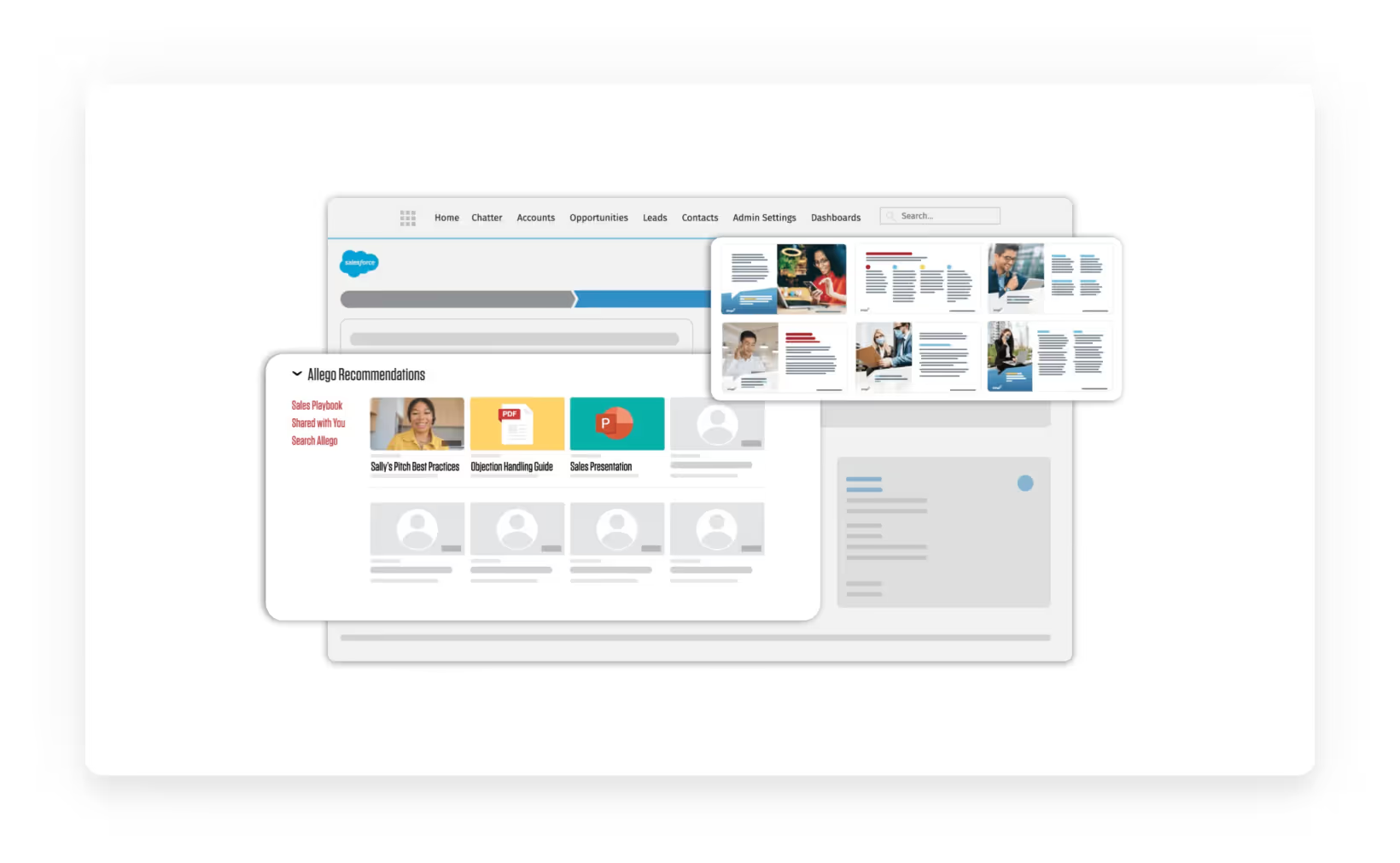
Training that reaches reps where they're already working, rather than pulling them away from it, is Allego's focus. Microlearning and real-time coaching take priority over long-form courses.
Reps and managers can quickly create and share short training content, AI-powered coaching gives real-time feedback on pitches and calls, and conversation intelligence analyzes recorded calls to surface specific areas to improve. Mobile access means training happens wherever reps already are.
Why it's great for sales teams
Sales happen fast, and Allego makes sure training keeps up. It's designed for learning in the flow of work, so it's easy to upskill without disrupting daily tasks.
Top features and benefits:
- Agile content creation: Quickly create and share training materials to keep up with changing needs.
- AI-powered coaching: Provide real-time feedback on sales pitches and calls.
- Conversation intelligence: Analyze recorded calls to uncover areas for improvement.
- Mobile access: Reps can train wherever they are without missing a beat.
Allego's focus on real-time learning makes it particularly effective for fast-paced industries.
7. SalesHood
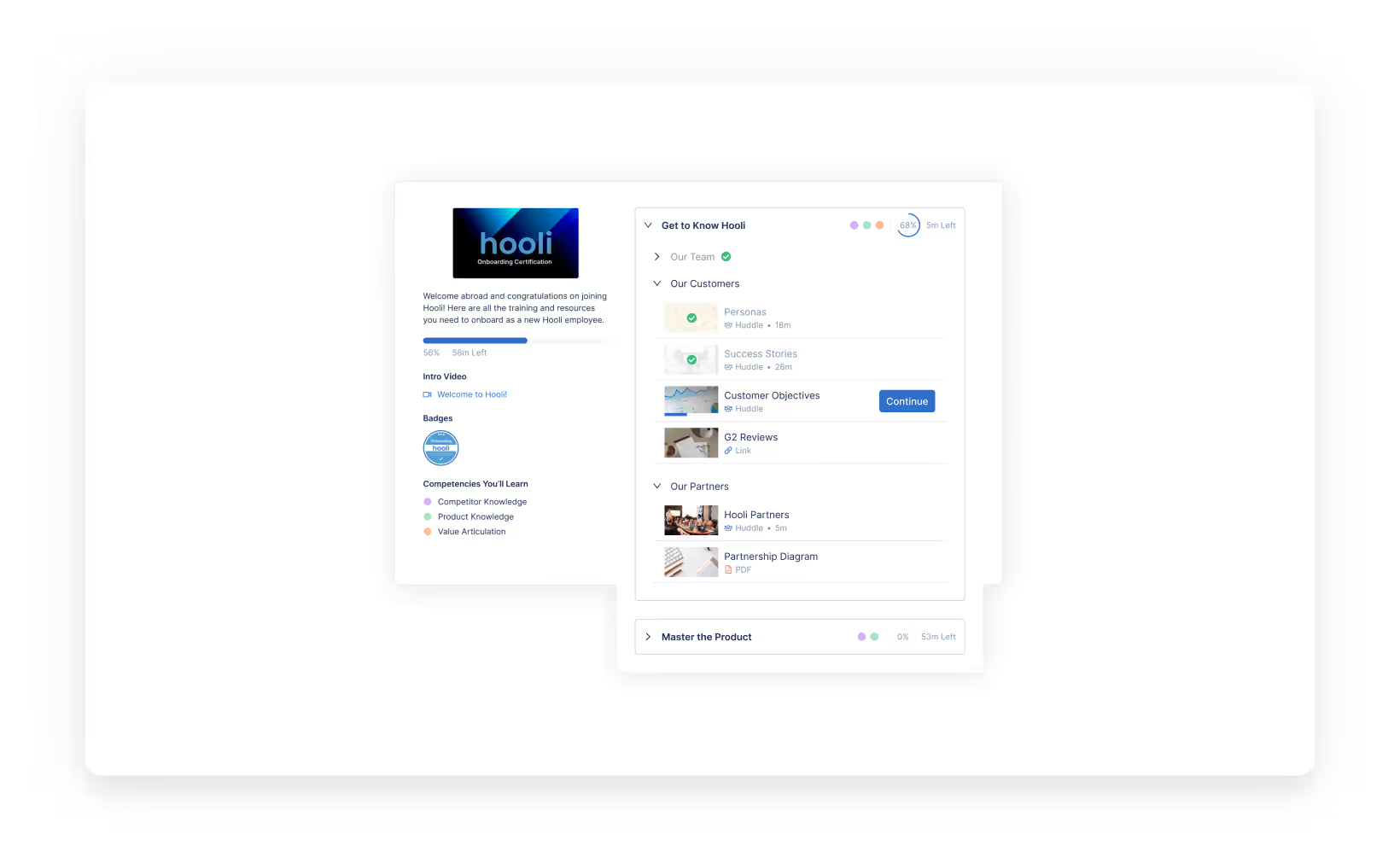
SalesHood zeroes in on structured, measurable ramp and productivity programs, for teams that want to track training's impact stage by stage.
Sales content management keeps materials centralized, coaching tools generate automated feedback on reps' calls, and digital sales rooms create personalized spaces for buyer engagement. Onboarding programs are built to get new hires productive faster, with progress tracked throughout.
Why it's great for sales teams
This platform is all about results. It helps teams quickly ramp up new hires, refine their sales strategies, and track progress at every stage.
Top features and benefits:
- Sales content management: Centralize all your training materials for easy access.
- AI-driven coaching: Provide reps with automated feedback to improve their skills.
- Digital sales rooms: Create personalized spaces for better buyer engagement.
- Onboarding programs: Get new hires up to speed faster with structured learning paths.
SalesHood also integrates with CRMs and collaboration tools, ensuring a smooth workflow for sales teams.
8. Learn:Up (formerly Workramp)
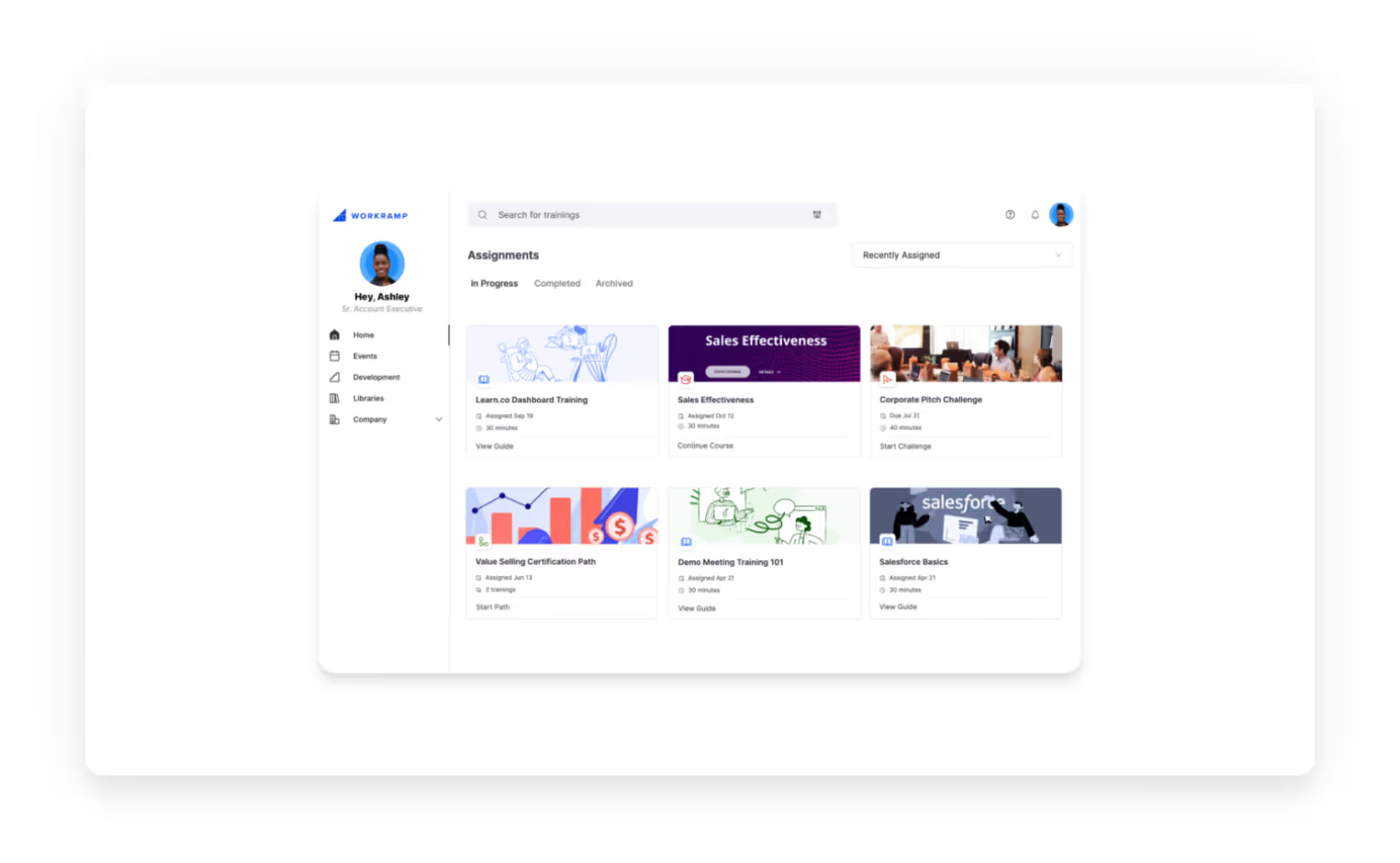
Learn:Up (formerly WorkRamp) combines customizable training paths with AI tools, for teams that need training built around specific roles rather than a one-size-fits-all course library.
Custom paths support role-specific training, coaching, and certification, and Practice, a companion product from the same team, gives reps interactive simulations to rehearse real sales scenarios before they matter. On-demand content and self-service libraries mean reps can find what they need without waiting on a trainer.
Why it's great for sales teams
Learn:Up is designed for teams that need tailored training programs. Its flexible learning paths and real-time simulations prepare reps for every sales scenario.
Top features and benefits:
- Custom training paths: Tailor programs to the needs of individual roles, including role-specific training, coaching, and pitch certification.
- Simulations: Use interactive role-playing exercises to build confidence and skills.
- On-demand training content: Meet your learners where they are (literally) with access to training content and self-service resource libraries, available through an all-in-one LMS and CMS.
- Detailed reporting: Track progress and refine programs to improve outcomes.
With its focus on personalization, Learn:Up is a good choice for companies looking to provide targeted training at scale.
Real-world results with a sales LMS
A great sales training program delivers business results that directly impact your bottom line. When you provide consistent, standardized training from centralized sales training tools, your sales team becomes more informed, productive, and compliant. The real impact lies in the bigger picture: measurable business outcomes that extend beyond learning metrics.
Improved sales performance
Sales training programs boost not only knowledge but also significantly increase sales effectiveness. When reps are equipped with the right skills, tools, and strategies, they perform better in every interaction. And let's be honest, this is exactly what sales training is all about. This leads to:
- Higher revenue: A well-trained sales team understands your products, your customers, and how to close deals. They'll convert leads faster and sell more effectively, boosting revenue.
- Increased win rates: When reps know how to navigate complex sales cycles, overcome objections, and present compelling value propositions, they're more likely to close deals.
Investing in ongoing sales training ensures your team stays sharp and adaptable to changing market conditions, maintaining a competitive edge.
Reduced onboarding time
Hiring new sales reps is a significant investment, and time is of the essence. The faster new hires can become productive, the quicker they can contribute to your organization's success.
- Accelerated time to productivity: A centralized training platform provides standardized onboarding, helping every new rep learn the same processes, tools, and best practices. This consistency lets them hit the ground running.
- Retention boost: New employees who feel confident and supported during their onboarding are more likely to stay with the company, reducing costly turnover.
A streamlined onboarding process not only saves time but also creates a positive first impression for new hires, setting the tone for long-term success.
Greater customer satisfaction
Your customers expect knowledgeable, helpful interactions with your sales team. A well-trained sales force makes sure your team delivers on these expectations.
- Deeper customer relationships: Training programs that emphasize soft skills like communication and active listening help reps build trust and rapport with customers.
- Faster problem resolution: With better product knowledge and access to up-to-date resources, sales reps can address customer concerns quickly and effectively.
- Positive brand perception: When your sales team consistently provides a great experience, it reflects well on your brand, fostering loyalty and repeat business.
Satisfied customers stick around and become advocates who recommend your business (driving growth through word of mouth). It's the dream: loyal customers who do the selling for you.
Improved product knowledge
Every product launch brings new features, benefits, and value propositions that your team needs to understand inside and out. Sales training ensures reps stay informed and confident when presenting your offerings.
- Stronger product positioning: Reps with in-depth knowledge can highlight features and benefits that resonate most with customers.
- Fewer mistakes: Accurate product knowledge minimizes errors in pricing, configurations, or technical details during the sales process.
- Adaptability to change: Whether it's new products, updates, or market shifts, a great training program keeps your team agile and informed.
Consistent training helps reps become trusted advisors rather than transactional sellers, elevating the customer experience and driving better outcomes.
Cost savings
A centralized sales training program doesn't just generate revenue—it also saves your business money in the long run.
- Fewer errors: Reps who are well-trained make fewer costly mistakes, like misquoting prices or mismanaging contracts.
- Lower turnover costs: Investing in professional development reduces turnover by keeping employees motivated. It all starts with understanding your team. In episode five of the ROI podcast, Hamish Knox shared this advice: “Understand the personal goals for each member of your team, and then tie the success of their personal goals to the success of their corporate goals.” When sales teams feel supported in achieving their own goals, they're more invested in driving organizational success.
- More efficient use of resources: Centralized platforms cut down on redundant efforts, saving time and money for your L&D team.
Over time, these savings add up, making your training program a smart financial investment that delivers both short- and long-term value.
Seeing the bigger picture
The benefits are clear when you look at a great sales training program through the lens of business outcomes. Director of L&D Brian Paige from The Aaron's Company said it best in episode two of the ROI podcast: “You need to invest in people over long term. That's what really drives sustained success over time.”
The key is consistency. Standardized training ensures every rep has the tools and knowledge to succeed, while a centralized platform makes it easier to deliver, track, and improve your training efforts.
When sales teams are trained right, they do more than hit targets. They redefine what success looks like.
Real-world success with sales readiness software
Sales training isn't only about learning. It's about growing, adapting, and winning. Atlassian and Litmus are doing exactly that with Absorb LMS. Let's see how they're turning training into tangible success.
Case study | Atlassian: Realizing the potential of AI in sales
Atlassian, a global leader in project management and workflow solutions, uses Absorb LMS to deliver impactful AI training to its customer-facing teams. With over 10,000 employees in 13 countries, Atlassian needed a reliable platform to centralize training, deliver consistency, and support learning outcomes.
The challenge
Atlassian recognized that a significant portion of their sales team's time was spent on administrative tasks, reducing time for revenue-generating activities. To address this, the company launched an AI-focused training program. The goal? Teach their team how to use internal AI tools to optimize productivity and boost efficiency.
The solution with Absorb LMS
Absorb LMS became the foundation for this initiative, offering a centralized platform for creating, delivering, and tracking training. Atlassian's instructional design team developed an engaging eLearning course using Absorb's SCORM and video capabilities, supporting an interactive and hands-on experience.
The course included two AI training modules, presented in a “Choose Your Own Adventure” format. These microlearning sessions broke down complex topics like customer messaging and administrative tasks into practical lessons. With Absorb's survey and reporting tools, the team could measure progress and improve content based on feedback.
The results
Atlassian achieved remarkable success:
- A 330% increase in weekly AI tool usage during the month of course launch.
- A 250% greater adoption rate for internal AI tools compared to pre-training levels.
- A 19% uptick in daily AI tool usage among participants.
Megan Vreeland, Senior Instructional Designer at Atlassian, credits Absorb LMS for its role in making this initiative possible:
“Absorb LMS was the foundation of this initiative's launch and strategy. Its reliability and ability to capture learning insights across our globally distributed workforce were critical to our success.”
This initiative didn't simply boost AI adoption. It gave Atlassian's sales team more time for customer engagement, strategy, and professional growth.
Case study | Litmus: Flexible, scalable sales training
Litmus, a leader in email marketing solutions, faced a different challenge. With a rapidly growing, dispersed sales team, they needed a training platform that could scale with their growth and adapt to their team's busy schedules. Absorb LMS delivered just that.
The challenge
Before Absorb, Litmus relied on weekly live Zoom training sessions. These mandatory sessions disrupted sales reps' workflows, and attendance wasn't always convenient. As the company expanded, this approach became unsustainable.
The solution with Absorb LMS
Absorb LMS revamped Litmus's approach to training by offering flexibility and scalability. With Absorb's user-friendly interface and integrated course authoring tool, Litmus built engaging, self-paced training programs tailored to their sales team's needs.
The results
Since implementing Absorb LMS, Litmus has seen:
- A 5% increase in training completion rates in just a few months.
- Positive feedback from sales reps, who appreciate the platform's ease of use and flexibility.
- Greater collaboration between sales leadership and training teams, with leadership actively requesting additional resources on the platform.
Bill Petersen, Head of Sales Enablement at Litmus, highlights Absorb's impact: “Our sales team loves it, and leadership does too. Absorb has made training a collaborative initiative across departments.”
As Litmus continues to grow, they plan to expand Absorb LMS to other departments and create comprehensive learning paths for new hires. Prioritizing training will help the company scale seamlessly as it grows.
Driving sales team development
From AI adoption to on-demand training, Atlassian and Litmus are making big moves with Absorb LMS. Their success proves that the right platform can make sales training scalable, impactful, and measurable.
Hit your goals with a revenue enablement platform
Sales training doesn't have to be complicated (or separate from the rest of your learning strategy). The truth is, that great sales training works best when it's part of a unified learning program. Why juggle multiple systems when you can streamline everything in one powerful platform? Absorb LMS delivers all your training needs—sales, compliance, product, and more—through one intuitive solution.
With Absorb, you're not just training your sales team; you're building a culture of learning that drives productivity and business results. By offering personalized, flexible learning experiences, Absorb helps your team stay sharp, adapt to change, and focus on what matters: delivering value to your customers.
Ready to elevate your sales training strategy? Absorb LMS is designed to help you achieve tangible outcomes, no matter the learner. Whether you're onboarding new reps, rolling out AI tools, or refining customer engagement skills, Absorb empowers your team to learn more effectively (and deliver results that stick).
Curious about how Absorb can support your GTM success?
Watch the webinar Mastering enterprise learning: The power of strategic learning systems to see how Absorb LMS makes strategic learning simple, scalable, and impactful.
Frequently asked questions
Is an LMS the same as an ERP system?
No. An ERP system runs a company's operations: finance, inventory, and HR records. An LMS runs training, housing course content, tracking who's completed it, and reporting on how that training connects to performance. The two get confused mainly because employees usually encounter both as enterprise software in their first week, not because they overlap in what they actually do.
What are the top 5 LMS systems?
For sales training specifically, five worth shortlisting are Absorb LMS, 360Learning, Mindtickle, Showpad, and Adobe Learning Manager, each built around a different priority: one platform for sales training and company-wide learning, peer-led coaching, continuous readiness tracking, sales-and-marketing content alignment, or scale across large, global teams. See the full comparison of all eight platforms below for how they stack up on CRM integration, coaching tools, and reporting.
What's the best sales training software?
There isn't one best answer — it depends on what you're solving for. Weigh any option against five traits: role-specific content, CRM integration, coaching and roleplay tools, reporting tied to business outcomes, and clear pricing. A 20-rep team and a 200-rep team will often land on different platforms even when they're evaluating the same list.
What's the best sales enablement platform?
That depends on whether the gap is training or enablement, since the two solve different problems. A sales enablement platform equips reps in the moment with content libraries, buyer engagement tools, and deal-specific collateral; a sales LMS builds skills over time through structured courses and certification. Of the platforms compared here, Showpad and Allego lean furthest toward enablement. If enablement is genuinely the need, use this guide for how the two categories fit together rather than as a ranked list of enablement platforms.
What's the easiest LMS to use?
"Easiest" depends on team size more than interface polish. A small team usually finds a lightweight platform that's fast to set up without a dedicated administrator the easiest to adopt. A larger organization's version of easy is different: how quickly admins can build role-based content and reporting, not how simple the screen looks on day one.
What's the best software for training new sales reps?
For onboarding specifically, prioritize a platform with standardized, role-based paths and reporting tied to ramp time rather than just course completion. What that looks like changes with headcount — a 20-rep team can lean on manager shadowing plus a lightweight LMS, while a 200-rep team needs the onboarding itself built into the platform so every new hire gets the same ramp regardless of location.
What is the best sales training software for tech startups?
There's no single winner, but at a lean headcount, prioritize a platform that's fast to set up without a dedicated administrator and that doesn't force enterprise-level complexity a small team doesn't need yet. See "What sales training looks like at 20 reps vs. 200" above for the full breakdown.